DSCF0031 DSCF0032 DSCF0033 DSCF0034
DSCF0035 DSCF0036 DSCF0037 DSCF0038
DSCF0039 DSCF0040 DSCF0041 DSCF0042
DSCF0043 DSCF0045    

Blog

PENSIÓN VERGARA

Spanish

Antiguo convento del siglo XV íntegramente restaurado, en el Barrio de Santa Cruz, con una personal visión de la decoración tradicional andaluza, y con más de cien aáos de experiencia en el servicio.

En el Barrio de Santa Cruz, el centro histórico, cultural y comercial de la ciudad, a cinco minutos de la Catedral, la Giralda y los museos y monumentos más importantes de Sevilla.

Recepción abierta las 24 horas, con un ambiente tranquilo y familiar de confianza.

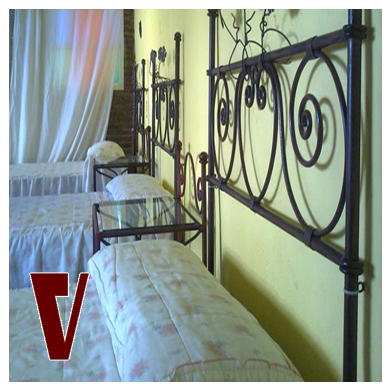
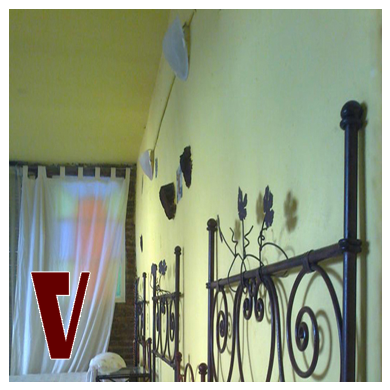
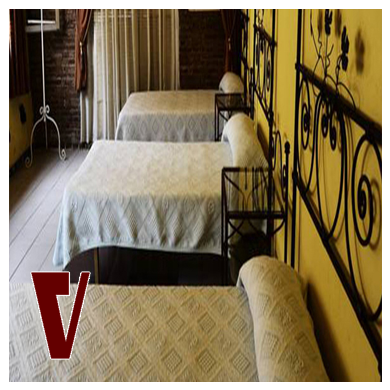
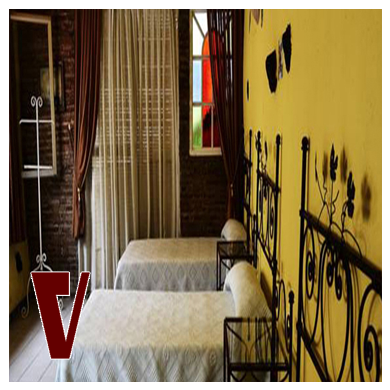
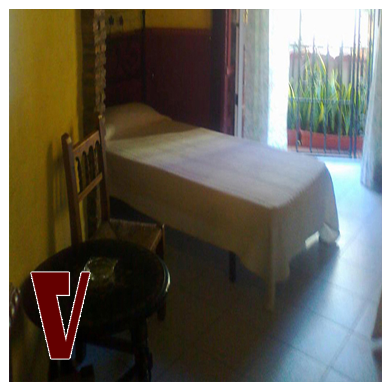
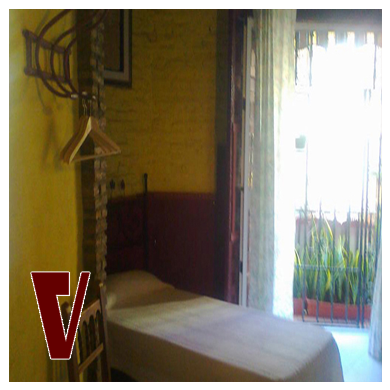
Habitaciones: 6 dobles, 2 individuales, 2 triples; 1 cuádruple

Baños: 5 baños completos comunes - 2 en el primer piso y 3 en el segundo

Autobuses: C1 y C2 desde la estación de trenes Santa Justa, C3 y C4 desde la estación de autobuses Plaza de Armas, C1 desde el apeadero de trenes de San Bernardo, y a 10 minutos a pie de la estación de autobuses del Prado de San Sebastián.

English

Restaured ancient house from the XV Century, in the best area of Seville, with a personal and traditional andalusian decoration.

Into the monumental quarter of the center of the city -Santa Cruz area-, at five minutes from the Cathedral, the Giralda and all the most important museums and monuments of Seville.

Open 24 hours, with a familiar and quite environment.

Rooms: 6 doubles, 2 singles, 2 triples, 1 quadruple

Bath: 5 common bathrooms, 2 on the first floor and 3 on the second floor

Bus: C1 and C2 from the train station Santa Justa, C3 and C4 from bus station Plaza de Armas, and 10 minutes walking from bus station Prado de San Sebastián.

VISIT SEVILLE

Alcazar

It's easy to be fooled into thinking this is a Moorish palace, some of the rooms and courtyards seem to come straight from the Alhambra. Most of them were actually built - by Moorish workmen it's true - for King Pedro the Cruel of Castile in the 1360's who, with his mistress Maria de Padilla, lived in and ruled from the Alcazar. Pedro embarked upon a complete rebuilding of the palace, employing workmen from Granada and utilising fragments of earlier Moorish buildings in Seville, Cordoba and Valencia.

Pedro's work forms the nucleus of the Alcazar as it is today and, despite numerous restorations necessitated by fires and earth tremors, it offers some of the best surviving examples of Mudejar architecture.

Later monarchs, however, have left all too many traces and additions - the most mundane of which are probably the kitchens constructed for General Franco who stayed in the royal apartments whenever he visited Seville.

The Giralda

The Giralda is the bell tower of the Cathedral of Seville in Seville, Spain, one of the largest churches in the world and an outstanding example of the Gothic and Baroque architectural styles. The tower is a former Almohad minaret which, when built, was the tallest tower in the world at 97.5 m (320 ft) in height. It was one of the most important symbols in the medieval city.

The tower, an ancient minaret from the Almohad mosque of Seville, is constructed in several distinct parts from different cultures. The Islamic body is the oldest part. It was built in 1184 under the orders of the Caliph Abu Yusuf Ya'qub al-Mansur by the architect Ahmad ibn Baso[1]. Several old buildings, including Roman stones from the ruined city of Italica, were reused to provide construction materials. The Giralda has no stairs; instead, 34 ramps are used to ascend the tower. The ramps were sufficiently wide for the muezzin to ride a horse to the top of the tower to yell the Adhan, call to prayer.

The copper sphere that originally topped the tower fell in an earthquake in 1365. Christians replaced the sphere with a cross and bell. Later, in the 16th century, the architect Hernán Ruiz designed an belfry extension to convert the minaret to a bell tower[2] At the top of the extension stands a statue representing Faith. According to tradition, Saints Justa and Rufina, the patronesses of Seville, are also the protectors of the Giralda.

The statue of the Giraldillo stands 4 m (13 feet) in height (7 m (23 ft) with the pedestal) and has crowned the top of the tower since its installation in 1568. The statue was originally called the Giralda ("weathervane") since it twists with the wind on a weathervane. With the passage of time, the tower became known as the Giralda while the statue took the name Giraldillo.

The Renaissance section of the tower also contains a large inscription of Seville's motto, NO8DO. Alfonso X of Castile gave the motto to the city when it continued to support his rule during an insurrection. A rebus, the motto means no me ha dejado or "it did not abandon me."

Covering the top of the tower is the "Lily section" of the tower. This surrounds the enclosure with the bell. In this section, located near the top of the tower, each corner has a basin containing bronze lilies. Below the statue of Faith sits a dome covered with stars.

The Giralda has several sister towers. The same architect, Jabir, who built the Giralda also built similar towers in what is now Morocco. The tower of the Koutoubia Mosque in Marrakesh served as a model for the Giralda and its sister, the Hassan Tower in Rabat. Several church towers in the province of Seville also bear a resemblence to the tower, and may have been inspired by the Giralda. These towers, most notably those in Lebrija and Carmona, are popularly known as Giraldillas. Several replicas of the Giralda have been built in the United States: one, now destroyed, in Madison Square Garden in New York and another in Kansas City. The clock tower of the Ferry Building in San Francisco, CA is also based on the Giralda.

The Cathedral of Seville

Gothic Architecture

Seville's Cathedral occupies the site of a great mosque in the late 12th century. Later, Christian architects added the extra dimension of height. Its central nave rises to an awesome 42 metres and even the side chapels seem tall enough to contain an ordinary church. The total area covers 11,520 square metres and new calculations, based on cubic measurements, have now pushed it in front of Saint Paul's in London and Saint Peter's in Rome, as the largest church in the world.

Sheer size and grandeur are, inevitably, the chief characteristics of the Cathedral, but as you grow used to the gloom, two other qualities stand out with equal force - the rhythmic balance and interplay between the parts, and an impressive overall simplicity and restraint in decoration. All successive ages have left monuments of their own wealth and style, but these have been restricted to the two rows of side chapels. In the main body of the cathedral only the great box like structure of the coro stands out, filling the central portion of the nave.

This opens onto the Capilla Mayor, dominated by a vast Gothic retablo comprised of 45 carved scenes from the life of Christ. The lifetime's work of a single craftsman, Pierre Dancart, this is the ultimate masterpiece of the cathedral - the largest and richest altarpiece in the world and one of the finest examples of Gothic woodcarving anywhere. The guides provide staggering statistics on the amount of gold involved.

At the end of the first aisle are a series of rooms designed in the rich Plateresque style in 1530 by Diego de Riano, one of the foremost exponents of this predominantly decorative architecture of the late Spanish Renaissance. Through the ante chamber, you reach the Capitular with its magnificent domed ceiling mirrored in the marble decoration of the floor. There are a number of paintings by Murillo here, the finest of which, a flowing Conception occupies the place of honour.

Alongside this room is the grandiose Sacrista Mayor which houses the treasury. Amid a confused collection of silver reliquaries and monastrances are the keys presented to Fernando by the Moorish and Jewish communities on the surrender of the city, sculpted into the latter in stylised Arabic script are the words 'May Allah render eternal the dominion of Islam in the city.'

The tomb of Christopher Columbus is always of great interest to scholars and tourists alike.

The climb to the top of Giralda is considered well worth the effort for the views alone.

Patio de los Naranjos

Located just outside the Cathedral, the Patio de los Naranjos dates back to Moorish times when worshippers would wash their hands and feet in the fountain here - under the orange trees - before their daily prayers.

Pension Vergara
c/ Ximenez de Enciso, 11
Barrio de Santa Cruz
41004 - Sevilla (Andalucia)
Tlf.: 954 21 56 68
pensionvergara@pensionvergara.com

H/SE/01124

Diseņo y Programación: webprograma.com

Otros enlaces

Seguros de coche - Peritar coche online